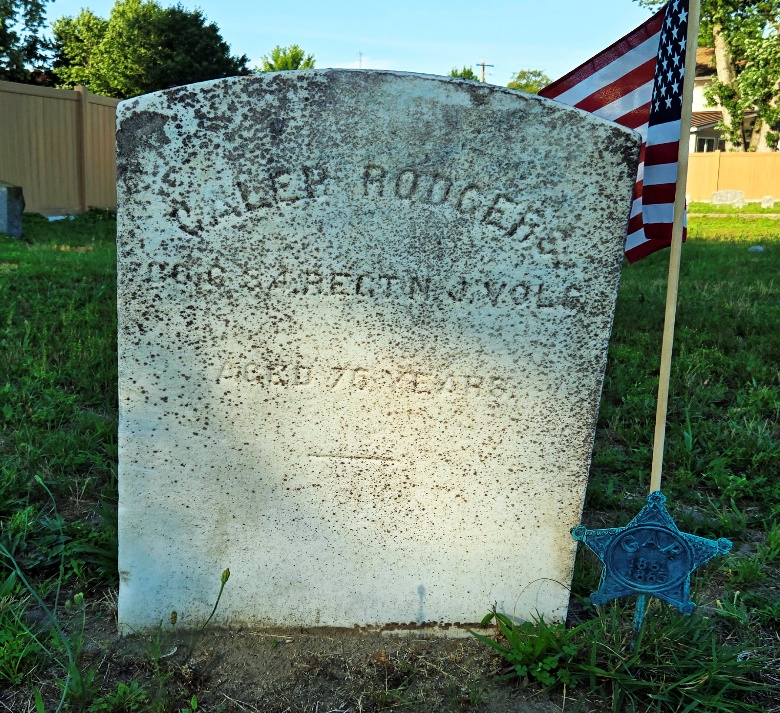
UNIT: Company C, 34th New Jersey Infantry
HOMETOWN: Shamong
BORN/DIED: 1824–1898
RANK: Private
GRAVE LOCATION: Old Tabernacle Cemetery, Row 19 Lot 3
Approximate Grave Location:
[GRAVE MAP PLACEHOLDER: Caleb Rodgers]
Old Tabernacle Cemetery, Row 19 Lot 3
Add an approximate grave-location image when available.

Hear My Story
[AUDIO PLACEHOLDER: Add Caleb Rodgers’s audio story and replace the links on the icon and “Hear My Story” heading.]

Read My Story
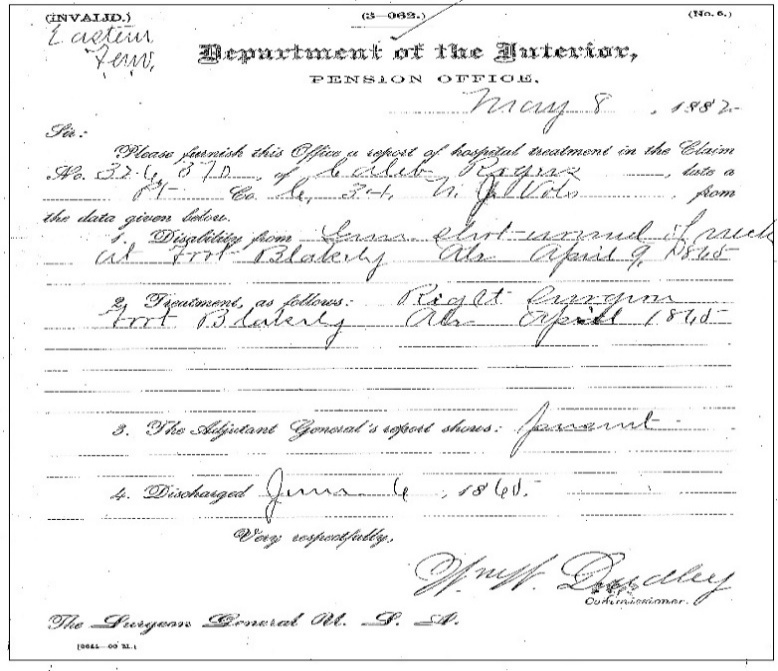
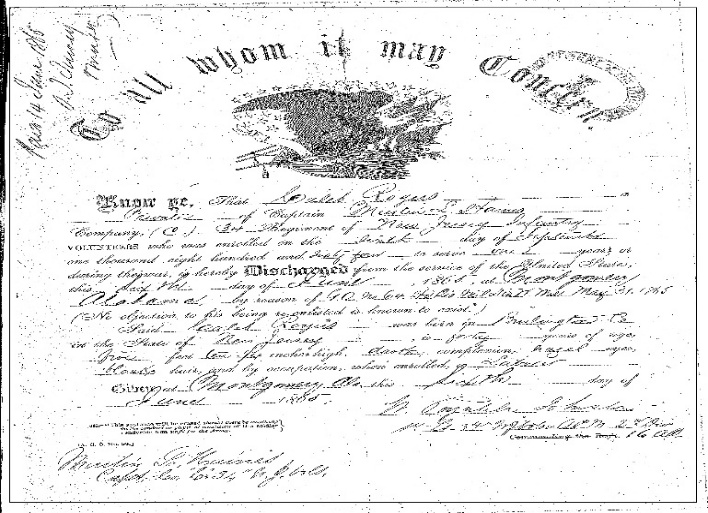
I was born in 1824 and married my wife Hester Sloan in 1845. I was mustered into NJ 34th infantry regiment on September 6, 1864, and served as a Private in Co. C. The 34th participated in many campaigns, however I only served for 9 months.
The battles I remember the most occurred between March and April 1865. They were the assault and capture of Spanish Fort and Fort Blakely. Our Union forces had concentrated on Spanish Fort, Alabama, and nearby Fort Blakeley. By April 1, Union forces had enveloped Spanish Fort, thereby releasing more troops that could focus on Fort Blakeley. Union forces built three rings of earthworks reaching ever closer until they were nearly 1,000 yards from the Fort Blakeley front. Confederate Brig. Gen. St. John R. Liddell, with about 4,000 men, held out against the much larger Union force until Spanish Fort fell on April 8 in the Battle of Spanish Fort. This allowed Major General Canby to concentrate 16,000 men for the attack on Fort Blakeley.
After a brief fight, which lasted 8 days, the Union troops breached the Confederate earthworks compelling the defenders to surrender. Around 5,000 African American forces played a major role in the successful Union assault. The casualty figures are approximate, but an estimated 75 Confederate soldiers were killed, with over 2,800 captured, and 150 Union troops were killed with 650 wounded during the siege and assault. The capture of Fort Blakeley was the last combined-force battle of the war. The battle was actually fought for hours after the Confederate General Robert E. Lee surrendered at Appomattox.
I mentioned the Confederate earthworks. You maybe interested to know that field fortifications in the 1800s were known as earthwork forts. They were constructed in various forms according to the topography of the land. They were constructed primarily from earth and wood. These materials were ready at hand and were designed for temporary use. To construct the fort, a framework was built, and as earth was removed from the “ditch” or dry moat that surrounded the fort, the earth was tamped (or rammed) into the framework. As the ditch grew deeper, the wall grew higher, extending to heights of 20-25 feet. The completed walls were 12-18 feet thick and were supported by a vertical pole system called “revetment.”
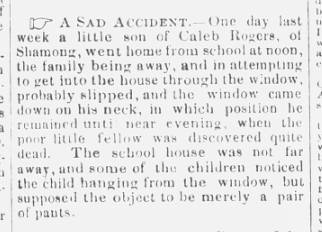
I was mustered out of the NJ 34th Infantry Regiment on June 6, 1865 and I returned to my family in Shamong, NJ. I worked as a farm laborer. Hester and I had 8 children. Our little girl Ann born in 1846 died soon after birth, our daughter Elizabeth born in 1848 lived to be 52 years old, Jemima born 1850 survived me and lived to be 80, Joseph born 3 years after Jemima died at the age of 34, our son Daniel born in 1859 died at 3 years of age. Charles born 1862 lived to be 63, Franklin who was born 2 years after Charles died in 1874 when a falling window trapped his neck between the window and the sill.
Our son George survived me and lived to be 55. In 1880 Hester and I were living in Shamong with our son George. My beloved wife Hester died in 1885, she was 63. I died 13 years later in the summer of July 1898 at the age of 74.
Timeline
1824: Born.
1845: Married Hester Sloan.
September 6, 1864: Mustered into Company C, 34th New Jersey Infantry as a Private.
March–April 1865: Served in the operations against Spanish Fort and Fort Blakely.
June 6, 1865: Mustered out and returned to his family in Shamong; worked as a farm laborer.
1874: Son Franklin died in a window accident.
1880: Lived in Shamong with Hester and son George.
1885: Hester died at age 63.
July 1898: Died at age 74.

